Starting From Zero Doesn’t Mean You’re Starting Too Late
Saving money can feel intimidating when you’re starting with nothing.
Maybe your bank account feels empty. Maybe every paycheck already seems spoken for. Or maybe you’ve tried saving before, only to dip back into it and feel like you failed.
If that sounds familiar, you’re not alone.
But here’s the good news:
You do not need a perfect income, a perfect budget, or a perfect financial situation to start saving money.
You just need a simple system—and a place to begin.
>> Learn how to Fix your Finances when you Feel Behind – HERE <<
Saving Money Is Like Planting a Tree
Imagine planting a small tree in your backyard.
On the first day, it barely looks like anything. Just a thin stem sticking out of the soil. No shade. No strong branches. No visible sign of the towering tree it could eventually become.
In fact, if you looked at it too quickly, you might wonder whether it’s even growing at all.
But growth doesn’t happen overnight.
Trees grow slowly, quietly, and consistently. They develop beneath the surface long before you notice dramatic changes above it. Day by day, roots spread deeper into the ground. The trunk becomes stronger. The structure becomes more stable.
And eventually, that tiny plant becomes something powerful—strong enough to survive storms, provide shelter, and stand firm through changing seasons.
Saving money works the exact same way.
At the beginning, your savings may feel small or insignificant. Maybe it’s only a few dollars a week. Maybe your account balance barely changes at first. And because the progress seems slow, it’s easy to think:
“This isn’t enough to matter.”
But that’s not true.
Because what matters most in the beginning isn’t the size of the amount—it’s the strength of the habit you’re building.
Every small deposit is like watering that tree.
Each time you save money, even in tiny amounts, you’re strengthening your financial roots. You’re building stability beneath the surface, even if you can’t fully see the results yet.
And over time, those small, consistent actions begin to grow into something much bigger:
Security.
Stability.
Confidence.
Peace of mind.
The people who successfully save money usually don’t start with huge amounts.
They simply start.
And then they stay consistent long enough for those small actions to compound into meaningful financial progress.
In this guide, you’ll learn the simplest way to start saving money from scratch, using practical strategies that are realistic, sustainable, and designed for real life—so you can begin building financial stability one small step at a time.
1. Start Smaller Than You Think
Your first goal shouldn’t feel overwhelming.
One of the biggest mistakes people make is trying to save too much too quickly.
That creates pressure—and pressure often leads to quitting.
Instead, start tiny:
- $5 per week
- $10 per paycheck
- Spare change from purchases
The goal isn’t to impress anyone.
The goal is to build momentum.
According to research from the Consumer Financial Protection Bureau, even small emergency savings improve financial resilience.
Financial expert Ramit Sethi says:
“Small wins create big momentum.”
Practical Tip:
Set your first savings goal at just $100.
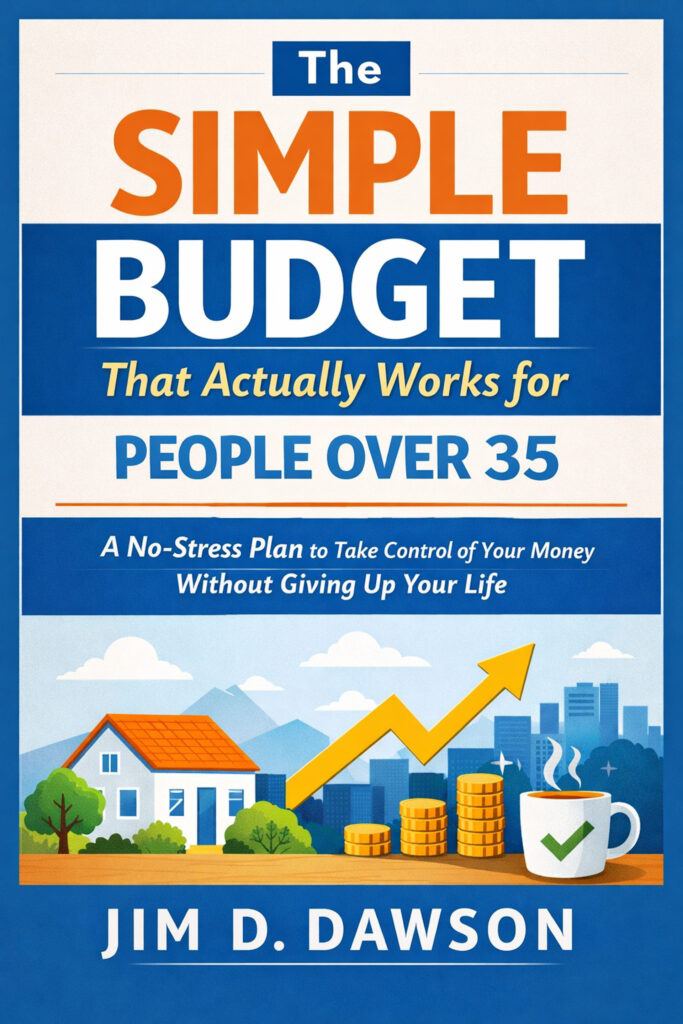
>> Here is the Very Simple budget that works when you are over 35 <<
2. Create a Separate Savings Account
What you can easily spend, you probably will.
If your savings sit in your everyday checking account, it’s harder to protect them.
That’s why separating your savings matters.
Use a dedicated savings account for:
- Emergency savings
- Future goals
- Financial cushion
This creates a psychological boundary between spending and saving.
Behavioral finance research shows that separating money into categories improves financial habits.
Practical Tip:
Open a separate high-yield savings account specifically for saving.
3. Automate the Process
The easiest savings system is the one you don’t have to think about.
Saving manually sounds easy—but real life gets busy.
Automation removes the need for constant discipline.
Set up:
- Automatic weekly transfers
- Payday savings transfers
- Round-up savings apps
Research from Harvard Business School shows that automation increases consistency and saving rates.
Author James Clear explains:
“You fall to the level of your systems.”
Practical Tip:
Automate your savings immediately after payday.
4. Focus on “Invisible Savings”
Small changes are easier to maintain.
You don’t need to dramatically cut your lifestyle to save money.
Instead, look for low-friction savings opportunities:
- Cancel unused subscriptions
- Reduce food delivery frequency
- Pause impulse purchases
- Redirect cashback rewards
These small adjustments often feel easier—and more sustainable—than extreme budgeting.
Practical Tip:
Choose one recurring expense to reduce and redirect that money into savings.
5. Build the Habit Before the Amount
Consistency matters more than size.
At the beginning, saving $20 consistently is far more valuable than saving $200 once.
Why?
Because habits create long-term results.
Behavioral psychology research shows that repeated actions become easier over time as routines develop.
Financial author Atomic Habits creator James Clear says:
“Every action you take is a vote for the person you want to become.”
Practical Tip:
Focus on becoming “someone who saves money,” even in small amounts.
6. Use Unexpected Money Wisely
Extra money can accelerate your progress.
Whenever unexpected money appears, use part of it to build savings.
Examples include:
- Tax refunds
- Bonuses
- Gifts
- Side hustle income
- Selling unused items
Instead of spending all of it immediately, save a percentage.
This helps your savings grow faster without affecting your regular budget.
Practical Tip:
Save at least 50% of unexpected income.
>> Here is the Starter Emergency fund that Actually WORKS <<
7. Stop Waiting for the “Perfect Time”
Financial progress starts before you feel ready.
Many people delay saving because they think:
- “I’ll start when I make more money.”
- “I’ll start after I pay off debt.”
- “I’ll start once life calms down.”
But the perfect time rarely arrives.
The best time to start saving is simply:
Now.
Even tiny progress matters.
Financial expert Morgan Housel explains:
“Good financial habits matter more than brilliance.”
Practical Tip:
Start saving this week—even if it’s a very small amount.
Small Savings Become Big Stability
The simplest way to start saving money from scratch isn’t complicated.
In fact, the simpler your system is, the more likely you are to stick with it long-term.
Because saving money isn’t usually about knowing what to do.
Most people already know they should save.
The challenge is building a system that feels realistic enough to continue—even during busy, stressful, or financially tight seasons of life.
That’s why consistency matters so much more than intensity.
As you begin building your savings habit, remember these key ideas:
Start smaller than you think
Tiny amounts remove pressure and make it easier to take action immediately.
Separate your savings
Creating distance between spending money and savings helps protect your progress.
Automate the process
Automation turns saving into a routine instead of a constant decision.
Focus on invisible savings
Small adjustments often create sustainable results without making life feel restrictive.
Build the habit first
The routine of saving matters more than the amount at the beginning.
Use unexpected money wisely
Bonuses, refunds, and extra income can accelerate your progress dramatically.
Start before you feel fully ready
Confidence often comes after taking action—not before it.
Saving money isn’t about perfection or huge amounts.
You don’t need to save thousands overnight. You don’t need a flawless budget. And you don’t need to wait until your financial situation feels perfect.
It’s about creating a habit that gradually strengthens your financial life over time.
A habit that slowly reduces stress.
A habit that creates stability.
A habit that gives you more control over your future.
Because eventually, those small savings become something much more valuable than money alone:
Peace of mind.
Flexibility.
Confidence.
Freedom to handle unexpected situations without panic.
And while those benefits may start small, they grow steadily—just like every strong financial foundation does.
One consistent step at a time.
Confidence in your future.
As Morgan Housel says:
“The ability to do what you want, when you want, with who you want, for as long as you want, is priceless.”
And every dollar you save moves you one step closer to that freedom. 🚀