Why Extreme Debt Plans Often Fail
When people decide to pay off debt, they often start with extreme motivation.
No eating out.
No entertainment.
No flexibility.
Every extra dollar goes toward debt.
At first, it feels productive.
But after a few months, exhaustion starts to build. The budget feels restrictive, life becomes frustrating, and eventually the entire plan falls apart.
Sound familiar?
Here’s the problem:
A debt payoff plan only works if you can realistically maintain it.
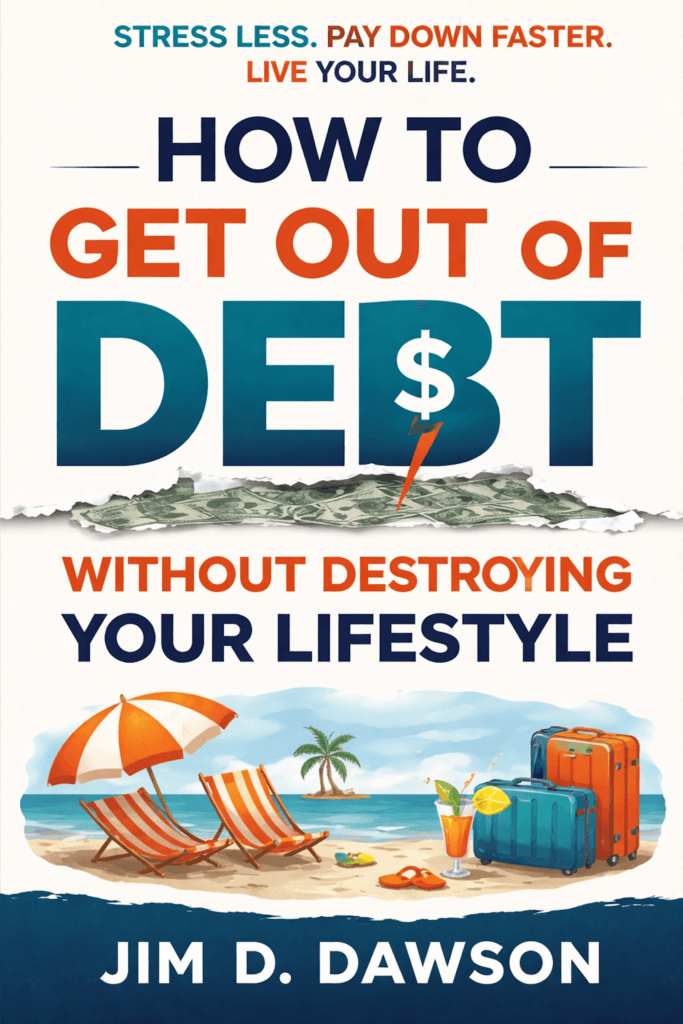
>> Get the Complete Beginner’s Guide to Getting out of Debt – HERE <<
Paying Off Debt Is Like Running a Marathon
Imagine trying to run a marathon at a full sprint from the starting line.
At first, it might feel exciting. Adrenaline kicks in, motivation is high, and you’re moving faster than everyone around you. You feel productive, determined, and fully committed to reaching the finish line as quickly as possible.
For the first few miles, it even feels like it’s working.
But then reality catches up.
Your breathing becomes heavier. Your legs start to tighten. The energy that felt endless at the beginning starts disappearing faster than you expected. And because you pushed too hard too early, your body begins to break down long before the race is over.
Eventually, you’re forced to slow down—or stop entirely.
Not because you were weak.
Not because you lacked motivation.
But because the pace wasn’t sustainable.
Debt repayment works the exact same way.
When people first decide to get out of debt, they often approach it with an “all or nothing” mindset. They cut every enjoyable expense, eliminate flexibility, and try to throw every spare dollar toward their balances.
At first, that intensity can feel empowering.
But over time, the emotional and mental exhaustion starts building. Life feels restricted. Every expense creates guilt. The plan becomes harder and harder to maintain.
And eventually, burnout sets in.
That’s why so many extreme debt payoff plans fail—not because the math is wrong, but because the strategy ignores human behavior.
The goal isn’t to move as fast as possible for a short period of time.
The goal is to create a pace you can realistically maintain until the debt is completely gone.
That’s what makes a debt payoff plan truly effective.
It balances progress with sustainability. It allows you to pay down debt consistently without feeling deprived, trapped, or financially exhausted. Instead of relying on short bursts of motivation, it builds habits and systems you can stick with long-term.
Because consistency—not intensity—is what creates lasting results.
In this guide, you’ll learn how to build a realistic debt payoff plan that actually lasts, so you can steadily reduce your debt, protect your mental well-being, and make meaningful financial progress without completely sacrificing your quality of life.
Start With a Clear Picture of Your Debt
Hook: You can’t build a payoff plan without knowing what you’re dealing with.
Before creating a strategy, list every debt you have:
- Credit cards
- Personal loans
- Student loans
- Car loans
Include:
- Total balance
- Minimum payment
- Interest rate
This creates clarity—and clarity reduces anxiety.
According to the National Foundation for Credit Counseling, people who actively track their debts are more likely to stay consistent with repayment plans.
Financial expert Suze Orman says:
“Facing the truth gives you power.”
Practical Tip:
Create a simple debt list in a spreadsheet or notebook.
>> Budgeting for BEGINNERS – Find out how – HERE <<
Stop Trying to Be Perfect
Hook: Perfection is one of the fastest paths to burnout.
Many debt payoff plans fail because they’re built around unrealistic expectations.
People try to:
- Cut all fun spending
- Never eat out
- Eliminate every non-essential expense
That may work temporarily—but it’s rarely sustainable.
Behavioral finance research shows that overly restrictive financial plans often lead to rebound spending and frustration.
Author Brené Brown explains:
“Perfectionism is exhausting.”
Practical Tip:
Build a plan you can realistically follow for years—not weeks.
3. Keep a Small “Enjoy Life” Budget
Sustainable debt payoff includes room for real life.
A realistic plan should include:
- Small entertainment spending
- Occasional dining out
- Hobbies or social activities
Why?
Because completely eliminating enjoyment often increases the urge to quit.
Research from behavioral psychology shows that sustainable habits require balance—not constant deprivation.
Financial expert Ramit Sethi says:
“Spend consciously on the things you love.”
Practical Tip:
Include a modest guilt-free spending category in your budget.
4. Build a Starter Emergency Fund First
Debt payoff without savings creates instability.
Many people focus so aggressively on debt that they ignore savings completely.
But without an emergency fund, unexpected expenses often lead to more debt.
Start by building:
- $500
- Then $1,000
According to research from the Consumer Financial Protection Bureau, even small emergency savings reduce financial stress and reliance on credit.
Practical Tip:
Pause aggressive debt payoff temporarily until you build a small emergency buffer.
5. Choose a Debt Strategy That Fits Your Personality
The “best” strategy is the one you’ll actually stick with.
Two popular methods include:
Debt Snowball
Pay off smallest balances first for motivation.
Debt Avalanche
Pay off highest-interest debt first to save money.
Both strategies work.
The most important factor is consistency—not mathematical perfection.
Research from the Journal of Consumer Research shows that visible progress increases motivation.
Practical Tip:
Choose the method that keeps you motivated long-term.
>> Need more Info on Snowball v/s Avalanche? – GET it HERE <<
6. Focus on Increasing Cash Flow
There’s a limit to how much you can cut.
Cutting expenses helps—but increasing income accelerates debt payoff significantly.
Options include:
- Freelancing
- Side hustles
- Overtime
- Selling unused items
- Skill development
According to the Bureau of Labor Statistics, income growth is one of the strongest drivers of financial improvement.
Practical Tip:
Dedicate all extra income directly toward debt payments.
7. Automate Your Payments
Automation reduces stress and missed payments.
Manually managing debt payments every month creates mental fatigue.
Automation helps by:
- Reducing decision-making
- Preventing missed payments
- Building consistency
Behavioral finance studies show that automated systems improve financial habits.
Author James Clear explains:
“You fall to the level of your systems.”
Practical Tip:
Automate minimum payments and schedule extra debt payments separately.
8. Measure Progress in Milestones
Progress feels better when you can actually see it.
Debt payoff takes time.
Without visible milestones, it’s easy to feel discouraged.
Celebrate milestones like:
- Paying off your first account
- Reaching 25% debt reduction
- Staying consistent for 6 months
Research from Harvard Business School highlights the progress principle—small wins improve motivation and persistence.
Practical Tip:
Track your debt payoff visually to stay motivated.
Sustainable Progress Beats Extreme Effort
A realistic debt payoff plan doesn’t rely on perfection or extreme sacrifice.
In fact, trying to be perfect is often what causes people to quit.
Because perfection creates pressure. It turns every mistake into failure and every unexpected expense into frustration. One bad week can suddenly feel like the entire plan is ruined.
But successful debt repayment doesn’t work that way.
It works through consistency.
Small payments made month after month. Habits repeated over time. Progress that may feel slow at times—but keeps moving forward steadily.
That’s what creates lasting results.
As you build your plan, remember these key principles:
Understand your full debt picture
Clarity reduces fear. Knowing exactly what you owe allows you to create a realistic strategy instead of avoiding the problem.
Avoid overly restrictive budgets
If your plan feels miserable, it won’t last. Sustainability matters more than intensity.
Leave room for enjoyment
A small amount of guilt-free spending helps prevent burnout and keeps your plan realistic.
Build a small emergency fund
Without savings, unexpected expenses can push you right back into debt.
Choose a strategy that fits your personality
The best payoff method is the one you can stick to consistently—not necessarily the one that looks best on paper.
Increase cash flow when possible
Extra income creates momentum and accelerates progress without relying entirely on cutting expenses.
Automate your payments
Automation reduces stress, decision fatigue, and missed payments.
Celebrate progress along the way
Small wins matter. They remind you that your efforts are working and help you stay motivated.
Debt freedom isn’t about suffering through years of financial misery.
It’s not about punishing yourself or removing every enjoyable part of your life in the name of financial progress.
It’s about creating a system that steadily moves you forward without burning you out.
A system that allows you to make progress while still living your life.
A system that feels manageable during stressful months—not just good months.
A system built around sustainability instead of short-term intensity.
Because the people who successfully pay off debt aren’t always the most extreme.
They’re usually the most consistent.
And over time, those steady, realistic actions lead to something powerful:
Freedom.
As Morgan Housel says:
“The highest form of wealth is the ability to wake up every morning and say, ‘I can do whatever I want today.’”
And every payment you make brings you one step closer to that freedom. 🚀