When Money Stress Takes Over
You sit down to create a budget.
Maybe you’ve been putting it off for a while, telling yourself “I really need to get this sorted.” So you finally open your bank account, ready to take control.
At first, it’s just numbers on a screen.
But then something shifts.
You glance at your expenses… and suddenly feel that familiar wave of stress. Your chest tightens a little. Your thoughts start racing:
“Did I really spend that much?”
“How did it get this high?”
“Am I further behind than I thought?”
What started as a simple task now feels uncomfortable—maybe even overwhelming.
So you hesitate.
You scroll for a few more seconds, unsure what to do next. And before you know it, you close the app and tell yourself, “I’ll deal with this later.”
Later turns into tomorrow. Tomorrow turns into next week.
And the cycle repeats.
Sound familiar?
This isn’t about laziness. It’s not a lack of discipline or motivation. You didn’t sit down intending to avoid your finances—you sat down to fix them.
But your brain reacted before you had the chance.
Because when money triggers anxiety, your mind treats it like a threat. And your natural response to a threat isn’t to analyze it calmly—it’s to avoid it, escape it, or delay it.
That’s why budgeting can feel so much harder than it “should.”
It’s not just a numbers problem.
It’s an emotional one.
And until that anxiety is understood and managed, even the simplest financial tasks can feel heavier than they actually are.
The good news?
Once you recognize that financial anxiety is part of the equation, you can start approaching budgeting differently—in a way that reduces stress instead of increasing it.
>> Learn how to Build a Financial Plan from Scratch – HERE <<
Financial Anxiety Is Like Trying to Think in a Noisy Room
Imagine trying to solve a puzzle in a room full of loud noise.
Voices overlap. Music is playing in the background. Notifications keep going off. There’s constant movement and distraction. You sit there, staring at the puzzle pieces, trying to make sense of them—but your brain just won’t cooperate.
You pick up a piece, then put it down. You lose track of what you were doing. Even though the puzzle itself isn’t that difficult, it feels difficult because your mind can’t fully focus.
Frustration builds.
You might even think, “Why is this so hard?”
Now imagine stepping into a quiet space.
No noise. No distractions. Just you and the puzzle.
Nothing about the puzzle has changed. Your ability hasn’t changed. But suddenly, everything feels different. You can think clearly. You can see patterns. You start making progress.
What felt overwhelming a moment ago now feels manageable.
Financial anxiety works in exactly the same way.
When your mind is filled with stress, worry, and uncertainty about money, it creates mental “noise.” Thoughts about bills, debt, future worries, and past decisions all compete for your attention at once.
And in that state, even simple financial tasks—like budgeting—can feel confusing, frustrating, or something you’d rather avoid altogether.
It’s not that budgeting is inherently complicated.
It’s that your mind is trying to process it while under pressure.
And just like in that noisy room, your ability to focus, decide, and plan is reduced—not because you’re incapable, but because your mental environment is working against you.
The key isn’t just to “try harder.”
It’s to reduce the noise.
In this guide, you’ll learn why financial anxiety makes budgeting harder—and more importantly, how to quiet that mental noise so managing your money becomes clearer, calmer, and far more manageable.
1. Anxiety Creates Avoidance
The more stressed you feel, the more likely you are to avoid your finances.
When money causes anxiety, your brain treats it like a threat.
Instead of facing it, you might:
- Avoid checking your bank account
- Delay creating a budget
- Ignore bills or financial decisions
This is a natural response.
Psychological research shows that anxiety often leads to avoidance behaviors, which temporarily reduce stress—but make the problem worse over time.
Financial expert Suze Orman explains:
“Facing your fears is the first step toward overcoming them.”
Practical Tip:
Start with just 5 minutes of reviewing your finances—small exposure reduces avoidance.
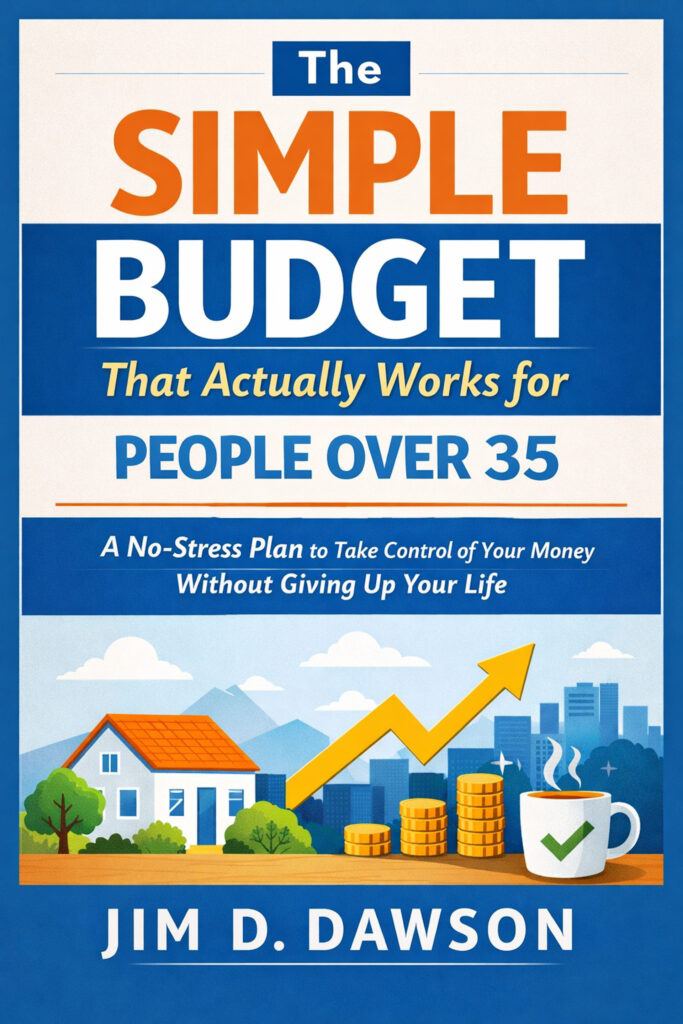
>> Get the Simple Budget that Actually Works for People over 35 <<
2. Stress Reduces Decision-Making Ability
Anxiety makes even simple choices feel overwhelming.
When you’re stressed, your brain shifts into survival mode.
This affects your ability to:
- Think clearly
- Make decisions
- Plan ahead
Budgeting requires all three.
According to research in behavioral science, stress reduces cognitive capacity—making it harder to process information and make sound decisions.
Author Daniel Kahneman describes this as limited mental bandwidth.
Practical Tip:
Work on your budget when you’re calm—not when you’re already stressed.
3. Fear of “Bad Numbers” Stops Progress
Sometimes the numbers aren’t the problem—the fear of them is.
Many people avoid budgeting because they’re afraid of what they’ll find:
- Higher expenses than expected
- More debt than they realized
- Less savings than they hoped
That fear can be powerful enough to stop action completely.
But here’s the truth:
The numbers don’t change whether you look at them or not.
Research from the National Foundation for Credit Counseling shows that people who regularly review their finances are more likely to improve them.
Financial author Morgan Housel says:
“Truth is more powerful than comfort.”
Practical Tip:
Approach your finances with curiosity, not judgment.
4. Perfectionism Makes Budgeting Feel Impossible
Trying to do it perfectly often leads to not doing it at all.
Many people believe their budget needs to be:
- Detailed
- Accurate
- Perfectly planned
But this pressure creates overwhelm.
Instead of starting, they delay.
Behavioral research shows that perfectionism is closely linked to procrastination.
Author Brené Brown explains:
“Perfectionism is not the same thing as striving for excellence.”
Practical Tip:
Start with a simple, imperfect budget—you can improve it later.
5. Emotional Spending Undermines Your Plan
Anxiety doesn’t just affect budgeting—it affects spending.
When you’re stressed, you’re more likely to:
- Spend impulsively
- Seek comfort through purchases
- Ignore your financial plan
This creates a cycle:
Stress → Spending → More stress
Research from the Journal of Consumer Psychology shows that emotional states significantly influence spending behavior.
Practical Tip:
Pause before purchases and ask: “Is this helping or hurting me long-term?”
>> Learn how to Build a Emergency Fund when you are Behind – HERE <<
6. Lack of Control Increases Anxiety
Uncertainty fuels financial stress.
When you don’t have a clear plan for your money, everything feels uncertain.
- “Do I have enough?”
- “Am I overspending?”
- “What happens if something goes wrong?”
This uncertainty increases anxiety.
But budgeting does the opposite—it creates clarity.
Research from the Consumer Financial Protection Bureau shows that structured financial planning reduces stress and improves financial confidence.
Practical Tip:
Create a simple budget to regain a sense of control.
7. Small Wins Reduce Financial Anxiety
Progress is the antidote to stress.
The more progress you make, the less anxiety you feel.
Even small wins—like:
- Saving $50
- Tracking expenses for a week
- Paying off a small debt
can shift your mindset.
Research from Harvard Business School highlights the progress principle—small wins increase motivation and reduce stress.
Author Teresa Amabile explains:
“Small wins can have a big impact on how people feel.”
Practical Tip:
Track and celebrate small financial wins.
Calm Creates Clarity
If budgeting feels hard, it’s not because you’re doing it wrong.
It’s because financial anxiety is making it harder.
And that distinction matters more than you might think.
Because when you believe the problem is you, it creates frustration, self-doubt, and pressure. But when you understand that anxiety is playing a role, something shifts—you can start addressing the real issue instead of blaming yourself.
And the good news is—this can change.
You don’t need to become a completely different person or suddenly master your finances overnight. You just need to approach things in a way that reduces pressure and builds clarity over time.
As you move forward, keep these key ideas in mind:
Anxiety leads to avoidance
When something feels stressful, your natural reaction is to avoid it—even if you know it’s important.
Stress reduces decision-making ability
When your mind is overwhelmed, even simple financial choices can feel confusing or exhausting.
Fear of numbers can block progress
Sometimes it’s not the numbers themselves—it’s the fear of what they represent.
Perfectionism creates overwhelm
Trying to get everything “just right” often leads to not starting at all.
Emotional spending increases stress
Short-term relief can create long-term pressure, reinforcing the cycle.
Lack of control fuels anxiety
When your finances feel unclear, your stress naturally increases.
Small wins build confidence
Progress—even in small amounts—helps reduce anxiety and build momentum.
Financial clarity doesn’t come from forcing yourself to be perfect.
It comes from creating a calm, simple system you can follow consistently—one that works with your life, not against it.
As Morgan Housel says:
“The most important part of every financial plan is your behavior.”
And behavior improves when the environment around it feels manageable—not overwhelming.
When you reduce anxiety—even slightly—you create space.
Space to think more clearly.
Space to make better decisions.
Space to build habits that actually stick.
And that’s how real financial change happens.
Not through pressure or perfection—but through small, steady steps taken in a calmer, more controlled way.
One step at a time. 🚀